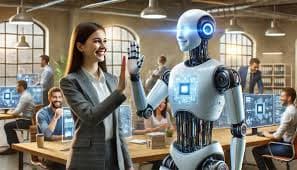
Future-Proof Careers: Jobs That Will Thrive in the Age of AI
By manya•
As artificial intelligence continues to reshape industries, one question lingers in everyone’s mind: Which jobs will actually survive the AI revolution? While automation is rapidly transforming the way we work, it’s not all doom and gloom. In fact, many careers are not only safe but poised to grow stronger in the coming years.
The key to understanding future-proof jobs lies in recognizing what AI cannot easily replicate—human creativity, emotional intelligence, complex problem-solving, and ethical decision-making.
First and foremost, careers that rely heavily on human connection will remain indispensable. Professions such as therapists, psychologists, social workers, and teachers require empathy, emotional nuance, and interpersonal understanding that machines simply cannot mimic authentically. While AI may assist in diagnosis or personalized learning, the human touch will always be central to these roles.
Another category that will thrive is creative professions. Writers, designers, artists, filmmakers, and content creators bring originality and cultural context into their work. AI can generate content, but it lacks lived experience, personal perspective, and true storytelling depth. The future of creativity will likely involve collaboration with AI tools, not replacement by them.
Healthcare professionals will also remain in high demand. Doctors, nurses, and surgeons perform tasks that require judgment, adaptability, and trust. AI can analyze data and assist in diagnostics, but real-time decision-making and patient care demand human oversight. Moreover, patients value reassurance and compassion—qualities that machines cannot genuinely provide.
Then there are skilled trades and hands-on jobs, such as electricians, plumbers, mechanics, and construction workers. These roles require physical dexterity, adaptability to unpredictable environments, and on-the-spot problem-solving. Automating such tasks at scale is far more complex than automating digital or repetitive office work.
Interestingly, AI-related roles themselves are among the safest. Careers in AI development, data science, cybersecurity, and machine learning engineering will only grow as technology advances. These professionals are the architects of the AI-driven world, making their skills essential.
Equally important are leadership and strategic roles. Managers, entrepreneurs, and decision-makers are responsible for guiding organizations, setting visions, and making complex judgments that involve uncertainty and ethics. AI can provide insights, but it cannot take accountability or lead with human values.
So, what does this mean for the average worker? The future isn’t about competing against AI—it’s about learning how to work with it. Adaptability, continuous learning, and developing uniquely human skills will be crucial.
In conclusion, while AI will disrupt many traditional roles, it will also create new opportunities. Jobs that emphasize creativity, empathy, critical thinking, and human interaction will not only survive but thrive. The future of work belongs to those who can combine technological tools with human strengths—because in an AI-driven world, being human is your greatest advantage.